
Winners of the 2026 ResourceSmart School Awards were announced on 11 June 2026 at the Melbourne Cricket Ground.
The awards are Victoria’s largest sustainability celebration for primary and secondary school students, teachers and school volunteers.
The 2026 theme, ‘Our sustainable community’, celebrated teachers, students and stakeholders sharing knowledge, passion, and commitment to drive sustainability for a thriving environment.
Read more about the winners and finalists in each category below.
Thank you to our sponsors
We are proud to collaborate with our sponsors to help deliver the ResourceSmart Schools Awards and to inspire our young people and schools to lead the way on sustainability.
The 2026 ResourceSmart Schools Awards would not be possible without the generous support of CDS Vic, the Department of Education, Bank First, Premier Waste and RMIT University.
ResourceSmart School of the Year
Recognising outstanding sustainability achievement in Victorian primary and secondary schools through:
- positive impact and innovation
- addressing sustainability as a cross-curriculum priority in the Victorian Curriculum
- engaging the broader community
- improvements to campus operations and/infrastructure
- sustainability leadership in the education sector/other schools.
Winner: RedGum, The Waldorf School of Central Victoria, Muckleford
From little things big things grow
From energy‑efficient infrastructure and thorough recycling systems, to collaborating with their community, this 5 star school fosters strong connections to nature using their wetlands as a classroom.
Students work with RMIT university to study gas emissions from stagnant waterways and with Junior Landcare, North Central Catchment Management Authority and Charles Sturt University to increase biodiversity in the wetlands, a space that has become a place to mentor schools beginning their sustainability.
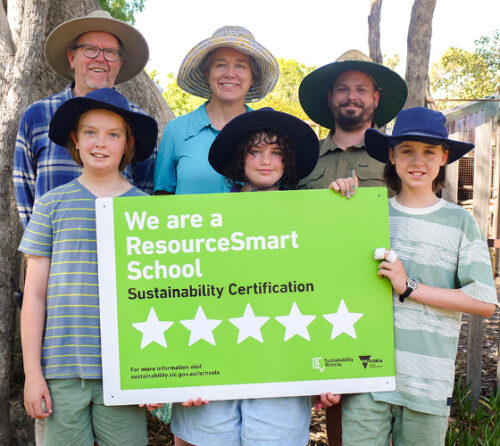
The campus garden uses recycled water systems and is maintained by parents and students. The produce is used for cooking classes, shared with local charities and sold by students at the Young Growers Market.
RedGum’s centering of sustainability ripples out from students to families and the broader community, creating a network of inspired sustainability champions.
RedGum models what is possible when a deep commitment to sustainability is paired with strong local and global awareness. The mentoring of other schools showcases a commitment to sustainability at school and beyond. Congratulations!
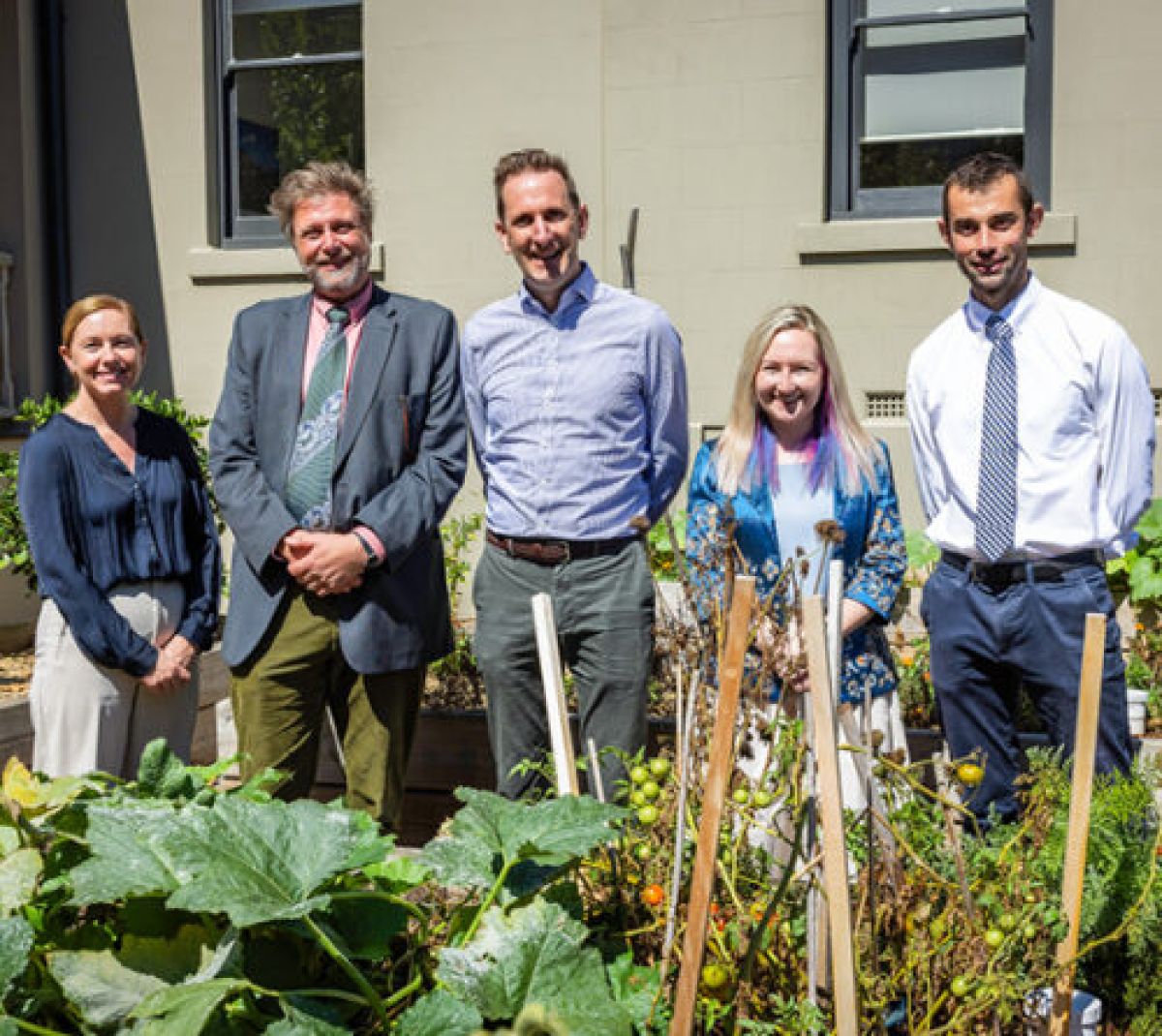
Judges in the ResourceSmart School of the Year category- Judges in the ResourceSmart School of the Year category
Finalists
Monbulk Primary School, Monbulk
Ten years of sustainability success and still going strong
Since 2015, this 5 star school has built a curriculum that aligns with the Eco Warriors and Girls on STEM clubs and the 'War on Waste' unit. However, it is their community engagement that makes them true influencers.
The Sustainability Team, formed by teachers and Year 6 students, promotes sustainability by mentoring peers and other schools, and working with local organisations.
For the school fair, students worked with the CWA to serve Devonshire tea on reusable dishware and partnered with a local Men’s Shed to support their sustainable projects.
In 2025, the Sustainability Team took their message from conferences to parliament, where students presented on the importance of school gardens and sustainability education to Victorian ministers, establishing their influence at a state level.
St Monica's College, Epping
Student leaders deliver real-world sustainability outcomes
A focus on hands-on experience and student leadership helps this 4 star school deliver sustainable outcomes.
The school’s wetlands and gardens are used as living classrooms where students explore sustainability through STEM, humanities and creative arts.
To support the circular economy, food waste is turned into compost and students ensure soft plastics and containers are recovered for recycling.
Students have contributed more than 1,200 volunteer hours resulting in an increase to the population of woodland birds at the school, a 25% increase in recycling, and increased food production.
Staff and students offer tours and workshops to local schools, helping promote sustainability beyond the school campus.
The sustainability culture at this school nurtures student leadership to drive real-world outcomes and inspire others to action.
Campus Infrastructure and Operations School of the Year
Celebrating schools that have been making significant improvements to their school campus through infrastructure improvements or changes to everyday operations and processes.
Winner: Melbourne Indigenous Transition School, Richmond
Indigenous cultural knowledge and student input drive sustainable upgrades
Guided by the principles of Caring for Country, this school has undertaken significant sustainability upgrades, that include students and the community codesigning building improvements and native landscaping.
By renovating – rather than demolishing – an existing building, the school was able to prevent waste, upgrade lighting, and install stormwater tanks.
Following a suggestion from a student, the school added the Eastern Kulin seasonal calendar to the campus using Woi-wurrung language, including a description of what happens in the landscape during each season.
Artwork and weavings from families and communities connected to students are displayed across the campus, ensuring culture is visible in learning spaces.
The school treats caring for the environment as a shared responsibility, and uses this understanding to guide upgrades and strengthen connection to Country.
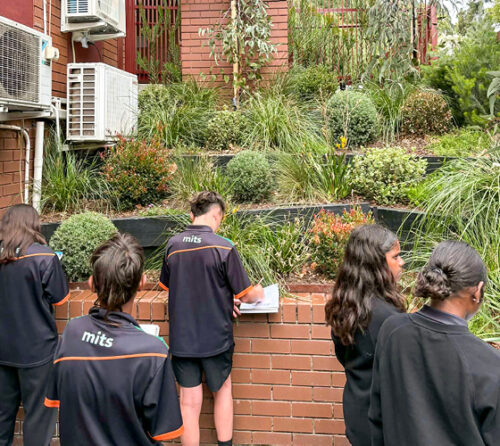
MITs has sustainability at its heart. It's inspiring to see how students co-designed the new school and continue to weave together cultural knowledge and sustainability, congratulations!
- Judges in the Campus Infrastructure and Operations School of the Year category
Finalists
Ocean Grove Primary School, Ocean Grove
Data meets passion to drive sustainability upgrades
This 3 star school uses audit data and a highly engaged community to create shared responsibility for the school environment and inform infrastructure improvements.
The school’s Sustainability Team used audits to identify high-impact upgrades. This resulted in the installation of solar panels through the VSBA Greener Government School Buildings program, as well as irrigation and drink taps to encourage bottle refilling.
These improvements have reduced the school’s energy and water use, and supported sustainability learning as students undertake follow-up audits to track progress and identify next steps.
Families helped create a school garden and yarning circle that increase biodiversity, encourage outdoor learning, and promote care for Country.
Collaboration has fostered a sense of shared investment in the environmental outcomes driven by this school’s sustainability program.
Siena Catholic Primary School, Ballarat
Super-duper solution to single-use plastic waste
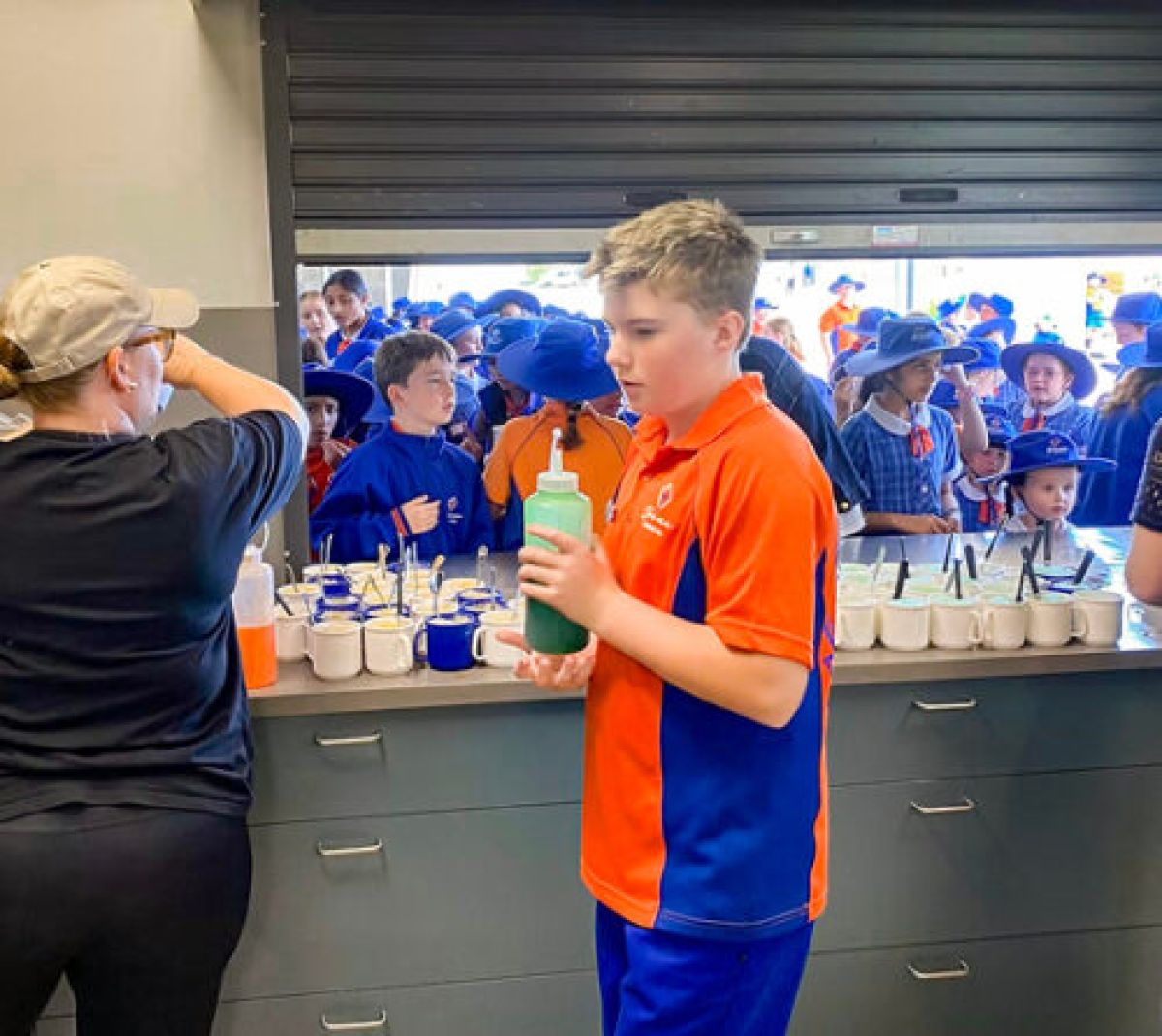
Students leapt into action after an audit revealed a significant amount of single-use plastic was being produced by Zooper Dooper icy poles sold though fundraising.
To reduce waste, an entrepreneurial student proposed replacing Zooper Doopers with snow cones in reusable cups. The student outlined costs, logistics and how to maintain this sweet fundraising activity while avoiding single-use plastic.
The result: teachers, parents and students worked together to make and distribute the snow cones to more than 250 students lined up for the first day of sales.
The initiative brought sustainability into school operations, maintained fundraising income, reduced waste, and highlighted the power of students to drive change.
With support from teachers and families, students transformed the school’s approach from reactive waste management to proactive prevention.
Emerging School of the Year
Celebrating schools that have recently joined RSS and already started to embed sustainability in everything they do.
Winner: Fitzroy North Primary School, Fitzroy North
Lean, mean, green machine makes light work of sustainability
This school’s student action team – the Green Machine – leads initiatives like community film screenings, compost and garden club and working bees.
Led by teacher Lucy Ballard, the Green Machine and parents formed the Sustainability Team with a focus on reducing waste at the school fete. To understand best practice, they interviewed parents from local schools and worked with organisations like Bettercup and Cirque du Soil. The team conducted bin audits during their fete and wrote up recommendations for future events.
Despite only beginning their RSS journey in 2024, this school has delivered measurable waste reduction and biodiversity improvements. Sustainability is now a central consideration in all aspects of school life, with students, parents and community partners playing a role in the school’s success.
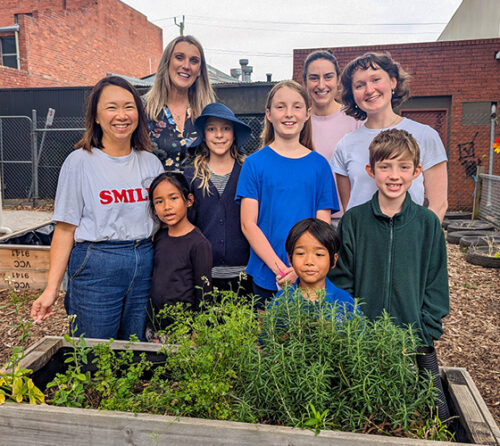
Fitzroy North Primary School is an inspiring example of a school community working together to make a difference - students, staff, and parents teaming up to reduce waste, using data to guide smart sustainability decisions, and sharing their successes with the wider community. Congratulations!
- Judges in the Emerging School of the Year category
Finalists
Greater Shepparton Secondary College, Shepparton
It’s all fun and games on this school’s sustainability journey
Joining RSS in mid-2025, students at this school design lessons, manage the school’s CDS Vic collection, and lead recycling initiatives.
To help reduce contamination, Environmental Leadership students developed two video games to help students recycle correctly.
After hearing from other schools, the team were inspired to plant a vegetable garden and met with home economics staff to determine what should be planted.
The school established partnerships with Close the Loop and EcoBatt to ensure campus batteries and printer toner could be recycled correctly. The IT department now repurposes laptops for parts, rather than sending them to e-waste recycling.
Student leadership is at the heart of this school’s sustainability journey, helping build positive momentum at school and in the wider community.
St Columba’s College, Essendon
SMART goals drive real world sustainability impacts
This school is moving from isolated projects to a connected sustainability program. With support from an environmental steward, the school delivers curriculum-aligned initiatives with measurable results.
More than 250 kg of food scraps have been turned into compost for school gardens and the community. Food tech classes cook with produce grown by students.
Students turn waste into products through the Precious Plastics program, supported by a partnership with Moonee Valley Sustainability, embedding circular economy design into their curriculum.
Using audit data, the school established waste baselines and set goals for improvement, like introducing ‘second chance’ paper stations to encourage students to make notebooks from scrap paper.
In record time, this school achieved 2 stars focusing on impact and uniting the community to become ResourceSmart.
School Volunteer of the Year
Celebrating a volunteer or volunteer group who supports the implementation of sustainability activities by contributing their time and expertise.
Winner: David Whillas – St Macartan’ Parish Primary School, Mornington
Local volunteer proves it takes a village
Volunteer David Whillas has made an exceptional contribution to this 5 star school’s sustainability goals through his work in the kitchen garden.
David – a resident of a local retirement village – has contributed over 120 hours of volunteer work to the school’s garden since 2025. His volunteering has strengthened links between the school and the retirement village.
David streamlined the school’s compost system, improving collection, reducing food waste and minimising contamination. The gardens and compost are the healthiest they have ever been and the school no longer purchases fertilisers or seeds. Students harvest seeds and sell seedlings to raise funds for sustainability projects.
Through his leadership and enthusiasm, David has empowered the school to embed practices that will set them up for a bright, green future.
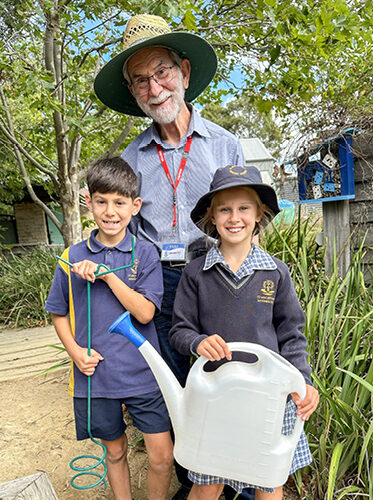
By sharing his skills and collaborating with students, the neighbouring retirement village, parents, and staff, David has delivered transformative and lasting change for the whole school community.
- Judges in the School Volunteer of the Year category
Finalists
Tan Allaway – Fitzroy North Primary School, Fitzroy North
Waste free fete quite the feat
Parent volunteer Tan Allaway helped kickstart this school’s sustainability journey, setting a strong example for the community by organising a waste-free fete.
Tan secured a grant to purchase reusable cups and visited local fetes to interview parents and capture insights. The fete was a success: landfill waste was reduced by a quarter of a tonne, mixed recycling was reduced by nine wheelie bins, 19 kg of food waste was composted, 7.2 kg of soft plastics were recycled, and 582 containers were deposited through CDS Vic.
The fete framework was so remarkable that City of Yarra, Parents for Climate and Plastic Free July shared it with their audiences!
Tan’s dedication has elevated the sustainability conversation and set the school on a path to becoming waste-free.
Kym Cinel – Tecoma Primary School, Tecoma
Volunteer role-models environmental stewardship
Volunteer Kym Cinel is key to the success of this school’s gardens, frog habitat, and chicken care. She supports working bees, classroom and garden sessions, and contributes to the school council.
The school’s thriving gardens showcase Kym’s impact, with students learning from her how to plant, harvest, compost, and care for animals.
Kym connects the school with families and local organisations, using these relationships to secure donations of plants, mulch, nesting boxes, and an old bath for the frog pond.
Kym’s collaboration helps teachers plan hands-on learning using the gardens as classrooms and making experiential learning a valued part of their teaching practice.
Kym’s involvement has shifted sustainability from a standalone concept to an embedded, lived practice at this 3 star school.
Student Action Team of the Year
Celebrating student teams that best demonstrate environmental leadership.
Primary school winner: Tecoma Primary School, Tecoma
Student leaders inspire environmental action at school and beyond
This school’s Student Sustainability Action Team leads innovative projects that strengthen their culture of environmental responsibility.
Students collaborated with community and staff to design and construct a yarning circle, selecting native plants and creating a space for learning and connection to Country. They built a frog habitat, researching water ecology, mapping site suitability and selecting plants.
Partnerships with local organisations like Landcare, Rotary, council, and local Aboriginal and Torres Strait Islander families, help students deliver impactful projects. In 2025, the team partnered with local groups to plant over 200 native trees and shrubs in a reserve by the school.
The inspiring team played a vital role in the school’s 3 star achievement and encourages the community to adopt sustainable practices to shape a greener future.
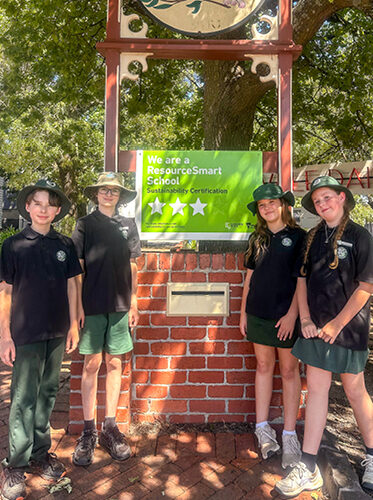
The breadth of initiatives, combined with strong student leadership, reflects a powerful and holistic program that integrates culture, community and environmental action. Great vision and delivery!
- Judges in the Student Action Team of the Year category
Primary School finalists
Boroondara Park Primary School, Balwyn North
Keen green beans deliver organised sustainability projects
The Keen Green Team’s passion and dedication help deliver real-world environmental impacts at this school.
The team is split into 3 groups – plants, animals and operational – supported by parents and Year 6 environmental leaders.
The plant group improves biodiversity by planting indigenous species and maintaining vegetable gardens. The animal group cares for chickens and manages the school’s worm farm and bug hotels. The operational group coordinates waste and biodiversity audits, collects eggs and presents at assemblies.
Parents and the community support sustainability initiatives, including renovating the bug hotel, hosting a ‘Welcome BBQ’ for new parents, organising working bees and collaborating with council.
The Keen Green Team is central to the school’s sustainability success, demonstrating strong student leadership and a commitment to coordinated environmental action.
Melbourne Girls’ Grammar – Morris Hall Campus, South Yarra
Green Team goes from strength to strength
Formed by 10 students in Year 4, this Green Team leads innovative initiatives that helped the school achieve 4 stars in 2025.
These biodiversity advocates raised $1000 for Zoos Victoria’s Fighting Extinction program and ran a Social Service Day to protect the endangered Swift Parrot, engaging younger students with yoga, scavenger hunts and a ‘Taylor Swift Disco’.
To set the school up for success, the team created an illustrated A–Z Energy Tips Book and designed and sewed draught stoppers.
The team leads community events like Walk to School Days, Farmer’s Markets and Reconciliation Week. Families have shared how these activities helped encourage changes at home, including Nude Food lunches and energy saving habits, highlighting the impact of these student leaders.
Secondary school winner: Lilydale Heights College, Lilydale
Real-world environmental outcomes encourage students to join the sustainability club!
This student-led Sustainability Club is driving a positive shift in this 4 star school’s culture. They coordinate ResourceSmart modules and embed sustainability at school and beyond.
Students raised funds to create a carbon sink at the school through initiatives like ‘Rug Up Day’, where heaters were turned off to promote energy conservation.
The club partners with the school’s First Nations Club to Care for Country, planting trees together within the carbon sink. In addition, they support CDS Vic collection, donating funds to Zoos Victoria’s Fighting Extinction program.
The club runs a Sustainability Op Shop at the local Rotary market, plants native species with council and builds nesting boxes for a nearby reserve.
Through advocacy and collaboration, the club empowers students to deliver meaningful environmental action.
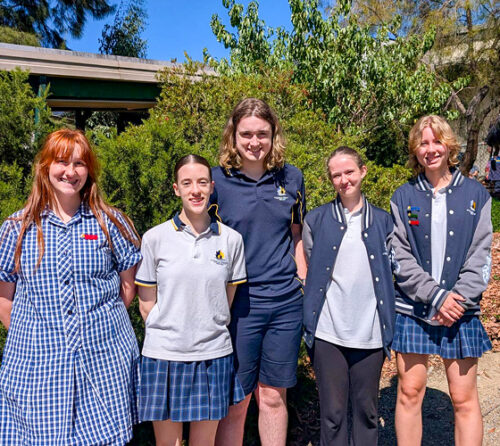
Great initiatives and community-based actions show this school goes above and beyond. Their deep commitment to partnerships, including with First Nations groups, is great to see.
- Judges in the Student Action Team of the Year category
Secondary School finalists
Camberwell Grammar School, Canterbury
Student team has eyes on the prize with 2050 focus
This school’s student sustainability team – Towards 2050 – is delivering environmental projects with an eye on the future.
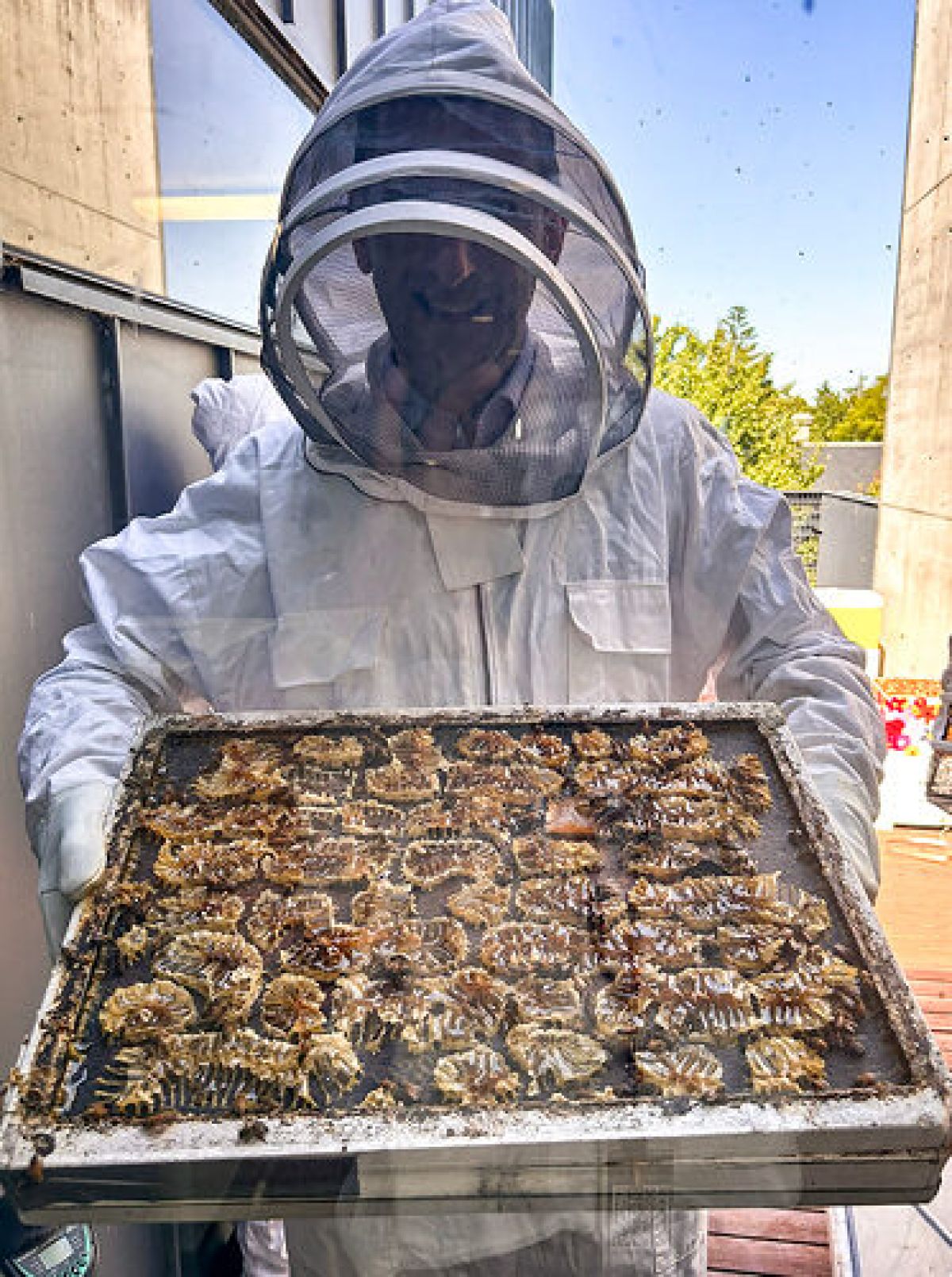
The team splits into groups who plan term-based themes, manage the garden and apiary, and produce of the ‘Fix the Future’ podcast.
The team organises events like Ride2School Day, Earth Day and National Recycling Week. The garden team sells honey, plants and bouquets at the school Open Day to raise funds for organisations like Zoos Victoria, Yarra Riverkeepers and Eastern Food Rescue.
A proposal developed by the team resulted in the installation of hand dryers powered by renewable energy, eliminating paper towel waste in 26 bathrooms.
Towards 2050 is a visible student-led collective that embeds sustainability into their everyday actions at this 2 star school.
Wellington Secondary College, Mulgrave
Student leaders use superpowers to deliver action
Using their individual strengths, Sustainability Champions at this 1 star school lead initiatives focused on waste, energy and biodiversity.
The students with social superpowers ran a transport survey that resulted in the school committing to install a bike shelter in 2026. In term 4, they led a conference about reducing food waste with 4 other schools.
The green thumb students with natural superpowers manage the school’s community garden and build microbat boxes.
Students with cultural superpowers ran a Fashion Sale, Swap and Repair event, where attendees could take home pre-loved clothes. The Vocational Education and Training Fashion students support circularity by repairing items brought in by their peers.
The Sustainability Champions deliver waste, energy and biodiversity outcomes for the whole school, becoming real-life heroes in action.
Curriculum Leadership School of the Year
Recognising teaching and learning of sustainability through the Victorian curriculum, and the creative and innovative approaches to addressing sustainability in lesson plans, units of work or school-wide curriculum.
Primary school winner: Wandin North Primary School, Wandin North
Sustainability heroes bring community on their green journey
This 4 star school works with their community to deliver a weekly school-wide sustainability program called HEROES (Harvest Eat Record Observe Environment Sustainability).
The school partners with local groups to deliver water education, cooking classes, tree planting and habitat box installation. Over the past 18 months, they collaborated with Rotary, council, Eco Warriors Australia, Treasuring our Trees, Eastern Health, Yarra Valley Water, local friends’ groups and many more.
Students may work on analysing waste audit data, determining the effectiveness of paper wind turbines or experimenting with different plant growing conditions as part of their hands-on learning programs.
Strong community partnerships enrich student learning and connect classroom investigations to real‑world sustainability action. This approach brings sustainability to life and extends its impacts beyond the school gate.
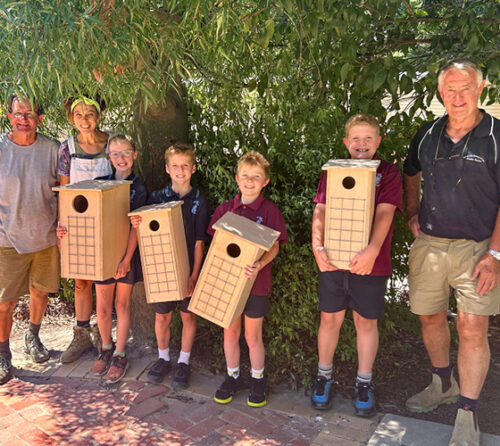
Image RSSA26 finalist Wandin North PSWell done on integrating sustainability into your curriculum at all levels. Impressive HEROES program and outstanding range of connections with community.
- Judges in the Curriculum Leadership School of the Year category
Primary School finalists
Melbourne Girls’ Grammar – Morris Hall Campus, South Yarra
Immersive curriculum brings sustainability to life
This school’s inquiry-based sustainability curriculum encourages students to think outside the box.
At this 4 star school, students undertake experiments with real-world applications like designing draught stoppers, comparing the impact of different window film on energy use, and leading events like Earth Hour.
The curriculum embeds Aboriginal and Torres Strait Islander histories and cultures through stories like Tiddalick the Frog, with students asked to interpret cultural narratives through art, drama and written reflections.
The school’s relationship with Zoos Victoria’s Fighting Extinction program allows students to participate in conservation research and design advocacy campaigns such as Wipe for Wildlife.
These experiences help students understand how their actions can deliver real impacts.
The school’s approach to sustainability helps students drive meaningful environmental action at school and beyond.
St James Parish Primary School, Sebastopol
Rewilding helps build a sustainability community of practice
Sustainability at this 3 star school is activated through knowledge sharing and place-based inquiry.
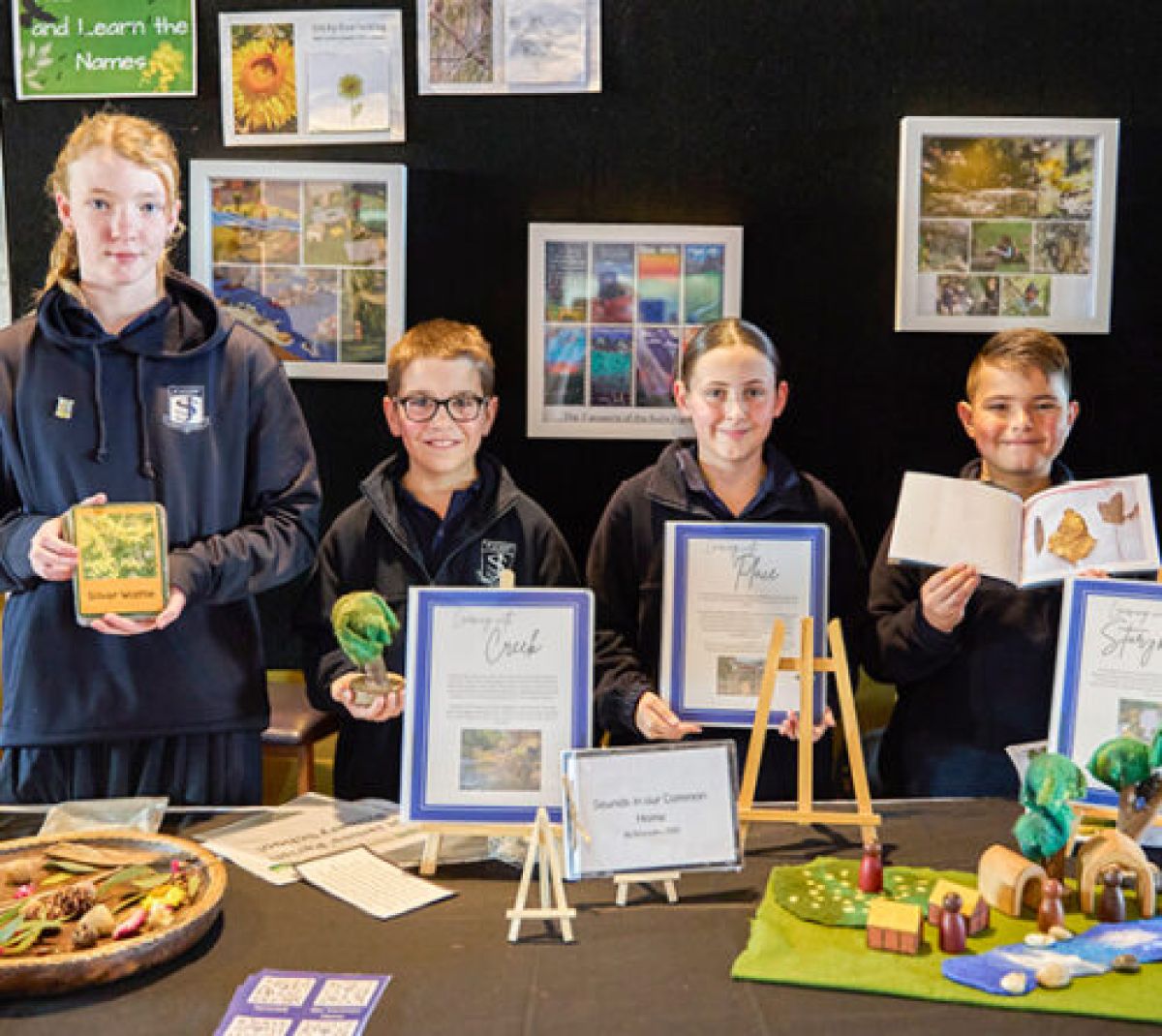
Students led a whole‑school regeneration project to rewild the school grounds, including a habitat corridor and outdoor learning space called Our Common Home. The project integrated learning across science, mathematics, English and history and First Nations perspectives.
Last year, the school established a community of practice with 5 neighbouring schools. Each term, students collaborate on planting days and environmental projects. This knowledge sharing led the school to join Royal Botanic Gardens Victoria’s Raising Rarity Schools Conservation Program, becoming custodians of an endangered daisy, the Leucochrysum albicans subsp. tricolor.
This school brings sustainability to life through conservation, collaboration and stewardship, helping students to connect their actions to tangible environmental outcomes.
Secondary school winner: Box Hill High School, Box Hill
Sustainability brought to life through creative curriculum
Every year, leadership at this 1 star school considers how sustainability will fit into each learning area and creates a central planner for all year levels.
The school uses creative approaches, like song writing or considering the impacts of fast fashion, to make sustainability engaging for students.
In 2025, Year 7 science students participated in Deakin University’s Artefacts of the Future project where they created an artefact representing either a new invention from 2050 or something from current day that has been phased out.
Last year, Year 11 students built bee hotels for the school, learning about native pollinators, tracking the population and improving the school's biodiversity.
This school’s approach, extends beyond recycling, delivering a creative curriculum that explores the many facets of sustainability.
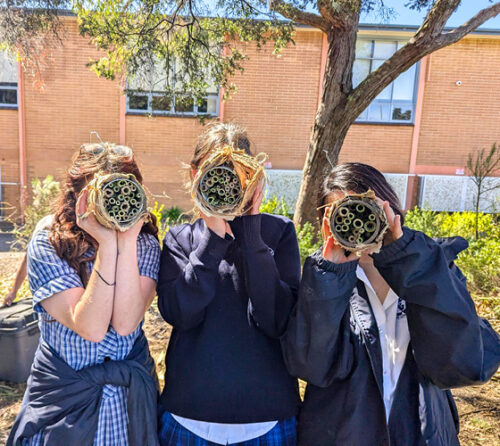
Image RSSA26 finalist Box Hill HighCongratulations on embedding a global view of sustainability into your curriculum! Your approach meaningfully engages students with sustainability through topics that resonate with young people.
- Judges in the Curriculum Leadership School of the Year category
Secondary School finalists
Aitken College, Greenvale
The sky’s the limit for this school’s sustainability curriculum
This school’s sustainability policy is underpinned by a focus on hands-on learning and community partnerships.
The school uses a local waterway as an outdoor classroom. Through the Waterwatch program students assess water quality and ecosystem health. In partnership with Melbourne Water, students learn about habitat restoration by removing weeds and planting indigenous vegetation.
In the Precious Plastics unit, students sort and shred plastic waste and turn it into useful products.
The school’s Sustainability Week strengthens environmental awareness through activities like native seed collection, plant propagation and revegetation projects.
In partnership with Fair Tropical Botanic Garden and NASA, students participated in the Growing Beyond Earth project where they propagated seeds and investigated how to grow food crops in space, stretching sustainability learning into new territory.
Camberwell Girls Grammar School, Canterbury
Students take on real-world sustainability challenges
This school’s sustainability curriculum extends beyond the classroom, helping students engage with local and global environmental challenges.
The Service Learning Program empowers students to become compassionate and informed citizens. In Year 7, they study the impacts of human behaviour on nature, exploring solutions and improving biodiversity at school and home.
For more than 5 years, students have constructed solar lamps for communities experiencing energy poverty as part of the SolarBuddys program.
The school’s MakerSpace, a dedicated learning area designed to promote STEAM subjects (science, technology, engineering, art, and mathematics), encourages community collaboration through hands‑on projects like turning milk lids into combs or learning sewing skills. Creative programs help set students on the path to becoming global citizens who contribute to a sustainable future for all.
Container Deposit Scheme (CDS) Vic Excellence Award
Celebrating schools using Victoria’s Container Deposit Scheme (CDS Vic) to achieve sustainability goals.
Sponsored by Victoria's Container Deposit Scheme.
Primary school winner: Pleasant Street Primary, Lake Wendouree
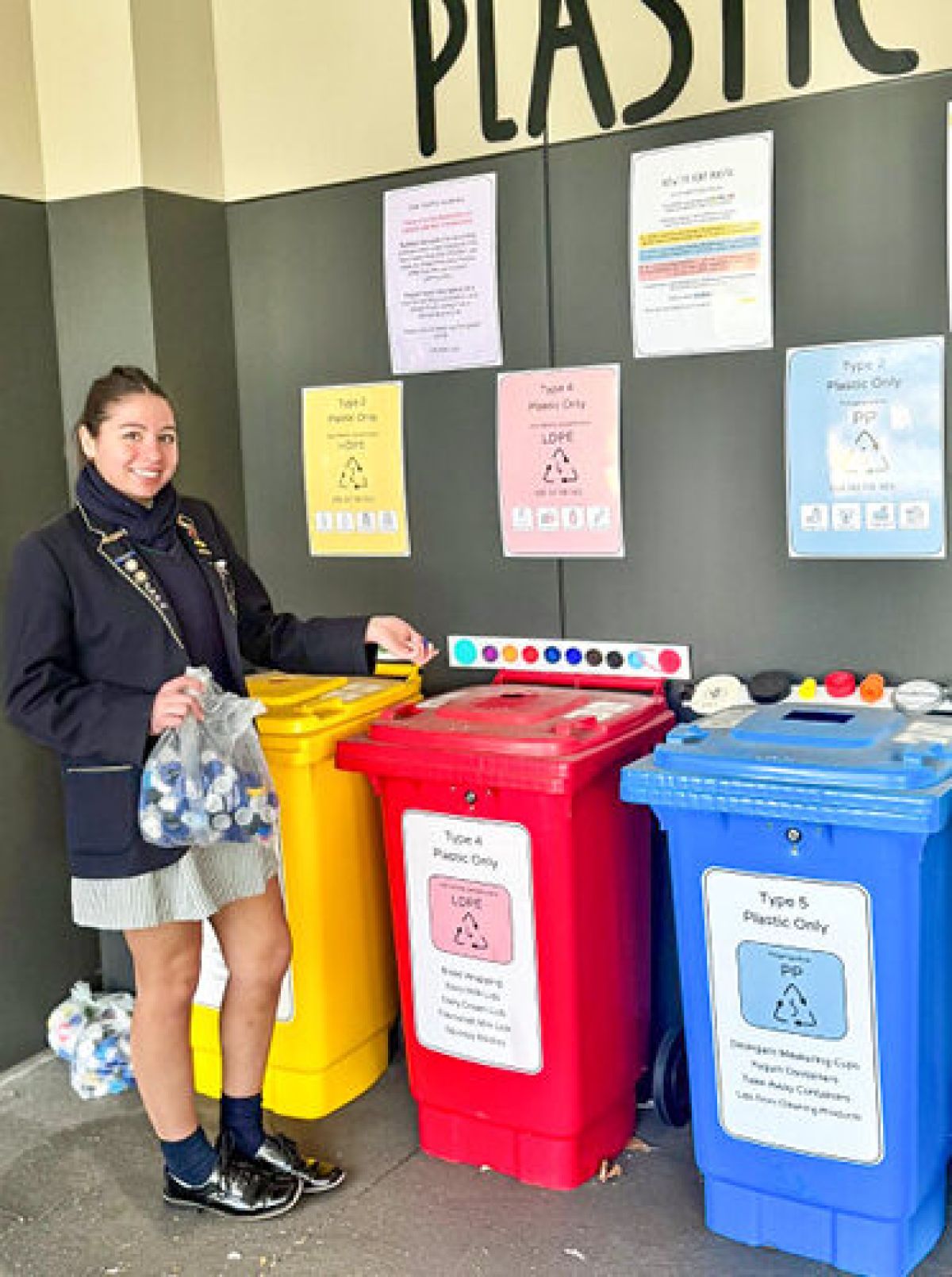
Busy bees lead container recycling at school and beyond
Students in this school’s sustainability group – the Pleasant Street Bees – take the lead on the school’s participation in CDS Vic. Their enthusiastic approach to container collection has shifted how the school community thinks about waste and recycling.
The group uses audit data to identify barriers to container collection and develop targeted videos and posters to encourage student and family participation.
Students organise events like Clean Up Australia Day, where they collect bottles and cans from the local oval and around Lake Wendouree, and promote collection at school assemblies. The efforts have raised $350 while reducing litter in their schoolyard and neighbourhood.
Collecting containers for CDS Vic has empowered student leaders at this school to improve recycling, raise funds and achieve their first ResourceSmart Schools star.
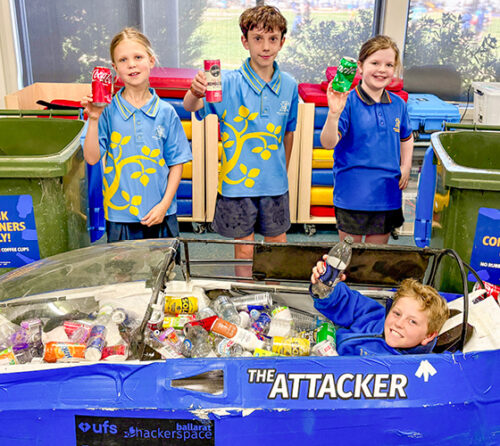
Congratulations! Your student-led and data informed campaigns shifted perceptions and behaviours within your school community, leading to waste reduction. You are a hive of very Pleasant Bees indeed!
- Judges in the CDS Vic Excellence Award category
Primary school finalists
Newstead Primary School, Newstead
School makes collecting containers everyone’s business
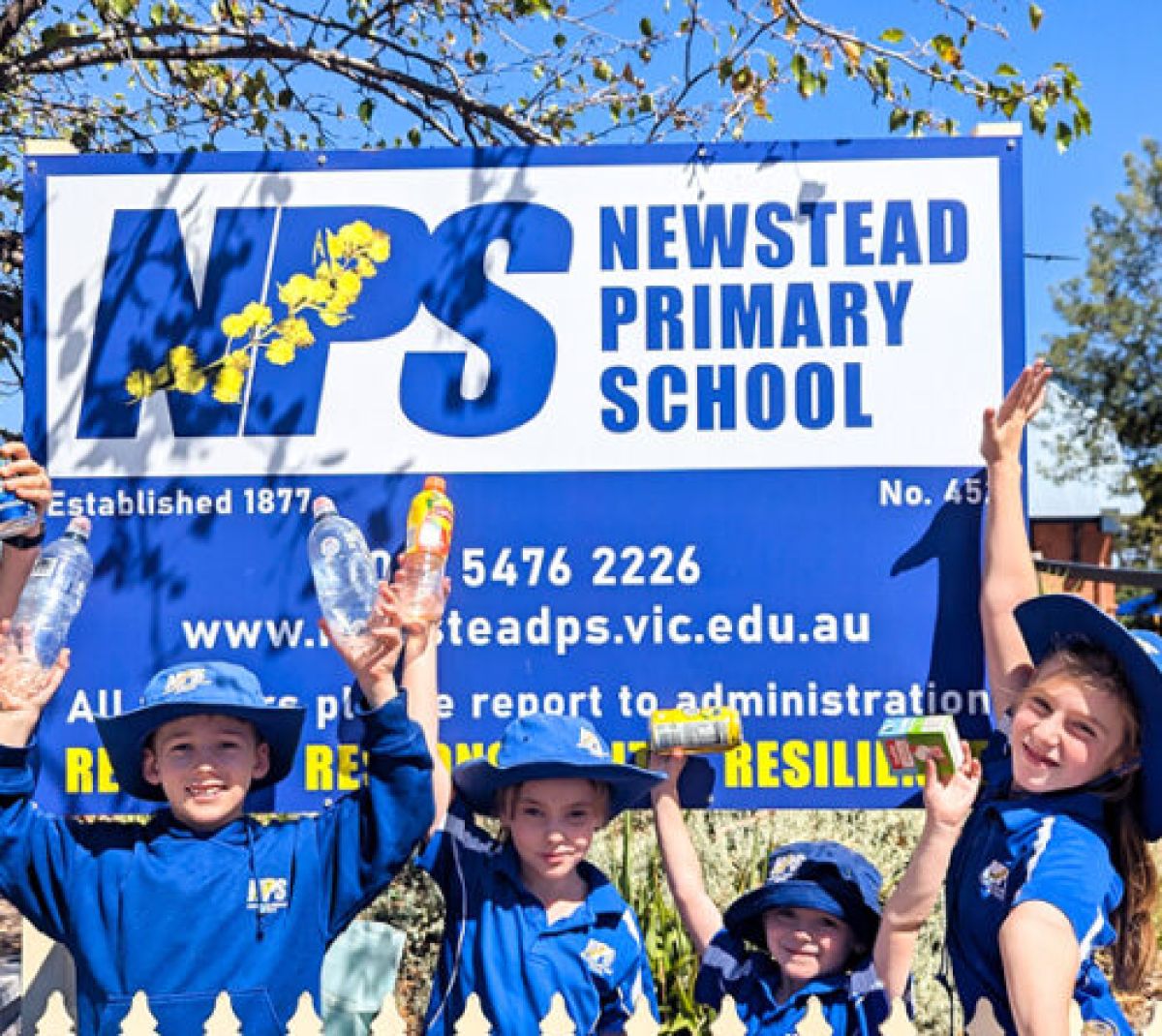
This school partnered with the local cricket club, Men’s Shed and caravan park to collect containers for Victoria’s Container Deposit Scheme (CDS Vic) and fundraise for the school.
Container collection has become a town-wide pursuit, with the whole community contributing and families volunteering to collect, sort, and transport donations. The funds collected from CDS Vic have been used to support biodiversity and outdoor learning through upgrades to the school’s vegetable gardens and the creation of new bug habitats.
The school celebrates the community’s participation publicly to reinforce local pride and strengthen the connection between the town and the school’s sustainability goals.
This school inspired their community to work together to reduce waste and embed sustainability into their everyday lives.
Tecoma Primary School, Tecoma
Student champions collect containers for change
Students at this 3 star school plan, promote and monitor their CDS Vic collection. Student ‘CDS champions’ model correct disposal, run peer-to-peer education and audit collection points.
When local collection partners came on board the school’s containers were no longer collected in one place. Instead of physically collecting the containers, students pivoted to analysing collection data supplied by volunteers, calculating environmental impacts and communicating outcomes to the community. This ensured students remained involved in CDS Vic despite access limitations.
Through promotion and partnerships with families, local groups and suppliers, the school has diverted thousands of containers from landfill, raising over $1,500 for sustainability initiatives.
By transforming challenges into opportunities for student leadership, CDS Vic has helped embed sustainable behaviours across the school and wider community.
Secondary school winner: Lilydale Heights College, Lilydale
Creative problem-solving drives recycling behaviour change
A student‑designed CDS Vic collection system increased this school’s recycling rates and empowered everyone to take ownership of sustainability initiatives.
The Sustainability Club constructed new container bins with side-entry rubber rosettes and locked lids.
Students painted endangered animal species on the bins to highlight that funds would go to Zoos Victoria’s Fighting Extinction program.
In 2025, the club conducted audits to identify barriers and come up with creative solutions including placing bins in strategic locations and nominating a community volunteer to assist with depositing containers.
Through continuous improvement, the school was able to go from capturing 1% of eligible containers to 50% in one year.
CDS Vic helped this school reduce waste, support conservation and empower students to lead creative and data‑driven sustainability action.
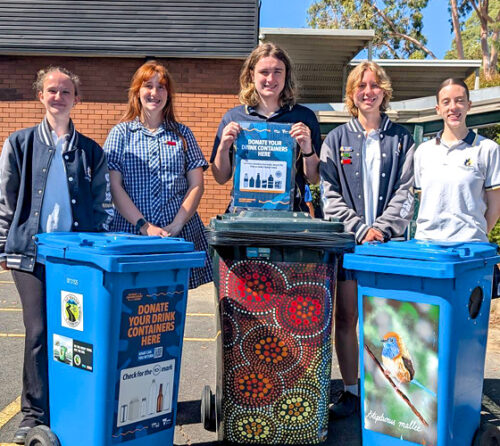
Through bin customisation, creative communications and fundraising for wildlife, Lilydale Heights College has demonstrated systems-thinking resulting in impactful initiatives and data-led solutions to behavioural challenges. Congratulations!
- Judges in the CDS Vic Excellence Award category
Secondary school finalists
Brentwood Secondary College, Glen Waverley
Gamification boosts container collection
By collecting containers at school events and fundraisers, this 5 star school reduced waste and raised funds for sustainability initiatives.
To raise awareness of CDS Vic, the student Green Team ran a competition and a raffle at their athletics carnival. The team set up a bin for each school house. Each time a student deposited a container, an additional point was added to the house’s total score. Students also received an entry into the raffle each time they added to their house’s bin.
On the day, over 700 containers were collected – a 250% increase on the 2025 event!
Student leadership was central to this school’s CDS Vic success. Gamifying the container collection helped encourage school-wide participation to reduce waste and litter.
Kew High School, Kew East
This school has container collection all (w)rapped up!
This school’s CDS Vic collection grew more than funds: with student leadership, creativity and self-confidence all benefitting from their participation.
After setting up collection bins, the school’s Eco Crew still had to sort through bins to find containers. This led to creation of the Duty Monitor role and a CDS Vic Collection Guide.
To encourage students to do the right thing, the crew used their creativity to develop signage, videos and even a CDS Vic-themed rap!
Funds from CDS Vic have been used to buy gloves, compost tumblers and seedlings to support the school’s sustainability efforts.
CDS Vic has increased recycling and empowered student leaders to use their creativity to deliver meaningful environmental change.
Teacher of the Year
Recognising sustainability educators who are embedding sustainability into the school’s curriculum and activities, fostering connections beyond the school gate and contributing to tangible impacts on the school’s sustainability program.
Primary school winner: Stephen McNeight – Wendouree Primary School, Wendouree
The garden specialist who transformed this school’s campus and learning
Stephen McNeight’s enthusiastic approach to sustainability involves the whole school, with no exceptions.
The school’s grounds have been transformed into a wildlife corridor with frog, lizard and bird gardens, a boardwalk, wetlands and a Stephanie Alexander Kitchen Garden, all shaped by Stephen’s expertise and care.
He has built relationships that have resulted in school projects with Fishcare, Zero Plastic Australia, CERES, Rotary, council, Zoos Victoria and Landcare groups.
Stephen was vital to the school’s 4 star achievement. One of his biggest legacies, however, is the development of a flexible learning program called CREATE which enables students who struggle in traditional classrooms to engage in gardening projects.By fostering a love for nature and learning, Stephen has improved the school campus while inspiring a whole community.
With 17 years at Wendouree Primary School, including seven years leading the school to achieve 4 stars, Stephen has transformed it into a leader in sustainability, exemplifying impactful leadership and a strong commitment to environmental initiatives through hard work and community partnerships.
Judges in the Teacher of the Year category
Primary school finalists
Steve Crook - Croydon Hills Primary School, Croydon Hills
Inspiring science teacher fosters culture of sustainability at school and beyond
Steve Crook is the driving force behind this 4 star school’s sustainability success. He transformed the school environment, regenerating it into a thriving native habitat with yarning circles that strengthen place-based learning and connection to Country.
In science, he explores sustainability through inquiry-based learning. Students maintain the school’s frog bog and analyse biodiversity in their native gardens.
Steve has built meaningful partnerships with the broader community to strengthen environmental leadership at the school. He collaborates with Interchange Outer East, where adults with disabilities work alongside Sustainability Club students as they care for the school farm. This initiative promotes inclusion, knowledge-sharing and care for the environment.
Steve has created lasting community connections and a sustainability program with impacts beyond the classroom.
David Clingin - Eastwood Primary School and Deaf Facility, Ringwood East
Passionate leader lives and breathes sustainability
David’s personal commitment to sustainability helps embed environmental thinking into every aspect of school life. Through hands-on learning, David empowers students and parents at this 5 star school to take meaningful action for the environment.
David brings sustainability to life in the classroom, helping students to grow vegetables, explore seasonal food, and discuss how everyday choices impact the environment. He helped reduce waste at the Twilight Market by encouraging environmentally responsible choices.
In 2025, David ran professional learning sessions to build staff understanding of the ResourceSmart Schools framework and seek input to develop the school’s Green Policy, ensuring long-term impact.
David models how small actions can deliver real environmental impacts that help build the school community’s passion for sustainability.
Secondary school winner: Ben Coleman – St Monica’s College, Epping
Teacher helps create student sustainability champions
Since starting as Sustainability Coordinator in 2012, Ben has made sustainability a key part of this 4 star school’s curriculum and turned the school’s wetlands and gardens into living classrooms.
In science, students investigate ecological interactions and climate impacts. Humanities classes explore First Nations plant knowledge and biodiversity. Art and English classes use the wetlands as inspiration for drawings and poetry.
Ben has built partnerships with environmental groups, council and schools that allow students and teachers to support schools on their sustainability journeys, including offering tours and workshops in the wetlands.
An environmental science teacher too, Ben has positioned sustainability as a defining element of this school’s identity, helping to drive positive environmental outcomes and turning students into passionate leaders. It was great to see an emphasis on student empowerment and leadership. We loved the diversity of approaches to sustainability represented in this entry, including the incorporation of STEM and futures skills learning.
Judges in the Teacher of the Year category
Secondary school finalists
Jo Menzies - Tristen Haines, Michelle Ponert, Tom Harley and Will Hone, Camberwell Grammar, Canterbury
Dream team makes light work of sustainability
This school’s collaborative CGS Sustainability Team, made up of 4 teachers and a coordinator delivers impactful, data-driven sustainability programs.Jo Menzies translates the school’s Net Zero performance into actionable reports and classroom engagement.
Tristen Haines embedded the Stephanie Alexander Kitchen Garden into the curriculum, using gardening, cooking and journaling to inspire young learners.
Michelle Ponert’s ‘Nude Food Dude’ initiative turns lunchbox packaging reduction into a game for all students.
Tom Harley’s ‘learn-alongside’ approach empowers students to take ownership of gardening and beekeeping.Will Hone founded the Fix the News Podcast, fostering student leadership and environmental literacy.
The CGS Sustainability Team inspires students, staff and the community to embed sustainability into their daily lives, bridging the gap between classroom learning and community action.
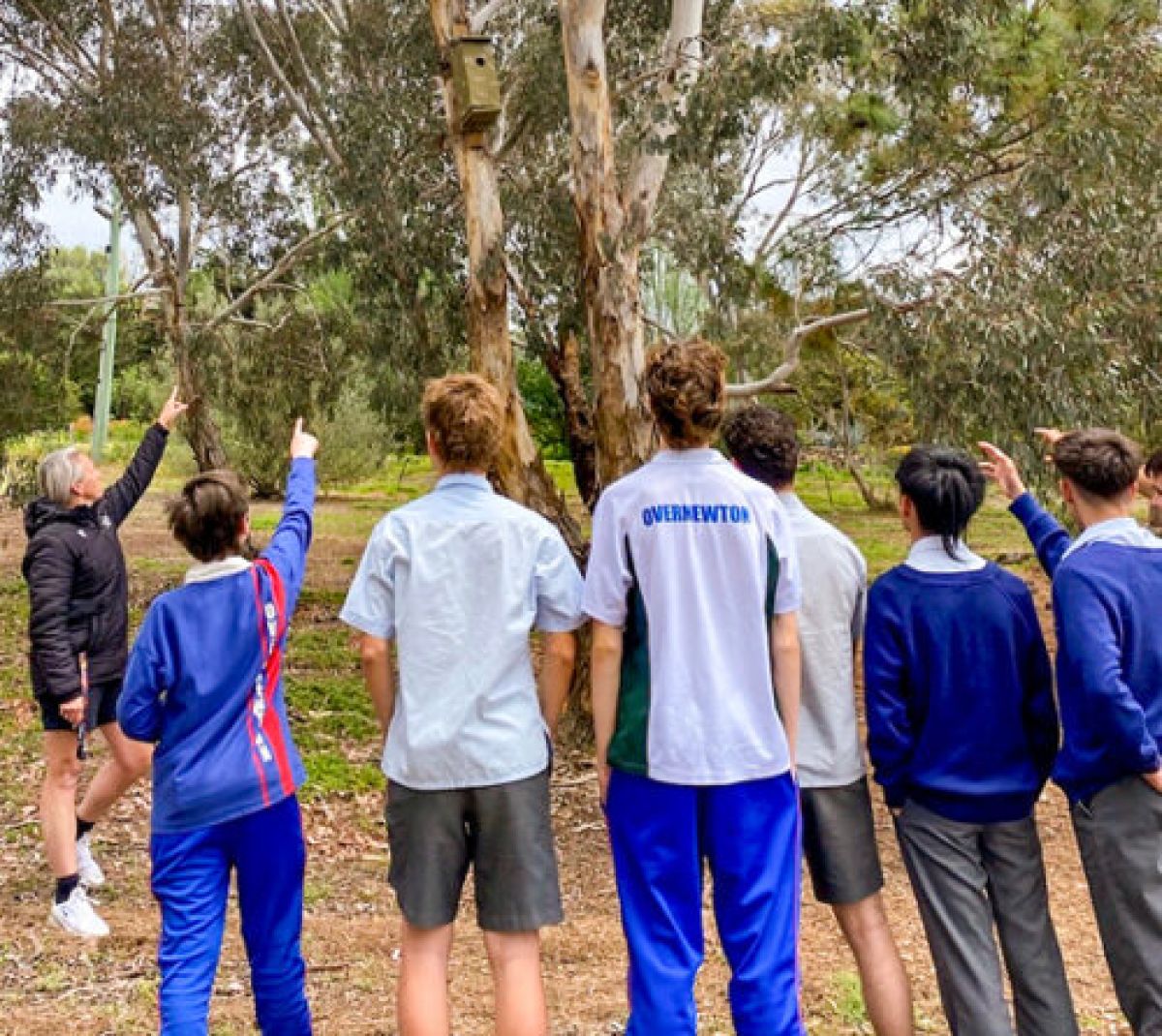
Nat Di Sauro - Overnewton Anglican Community College, Yirramboi Campus
Indigenous cultural knowledge drives sustainability
Nat Di Sauro combines environmental stewardship with Indigenous perspectives to deliver sustainability education. Nat leads immersive experiences across sites like Gariwerd and Mt Cole, engaging with Traditional Owner knowledge to shape students’ understanding of sustainability.
An Outdoor and Environmental Studies teacher, Nat fosters partnerships with Conservation Volunteers Australia and Zoos Victoria to engage students with bandicoot monitoring, habitat restoration and citizen science.Nat organises the 10-day Galiwin’ku immersion program where students live alongside community. The Galiwin’ku Op Shop project helps students contribute to circular economy practices while building intercultural relationships.
Nat’s creativity extends to the arts, establishing curriculum links between Bangarra Dance Theatre and the Year 9 Dance Project.
By integrating Indigenous knowledge and experiential environmental learning, Nat supports students to become custodians of Country.
Finalist image gallery
Related pages
Page last updated: 24/09/26