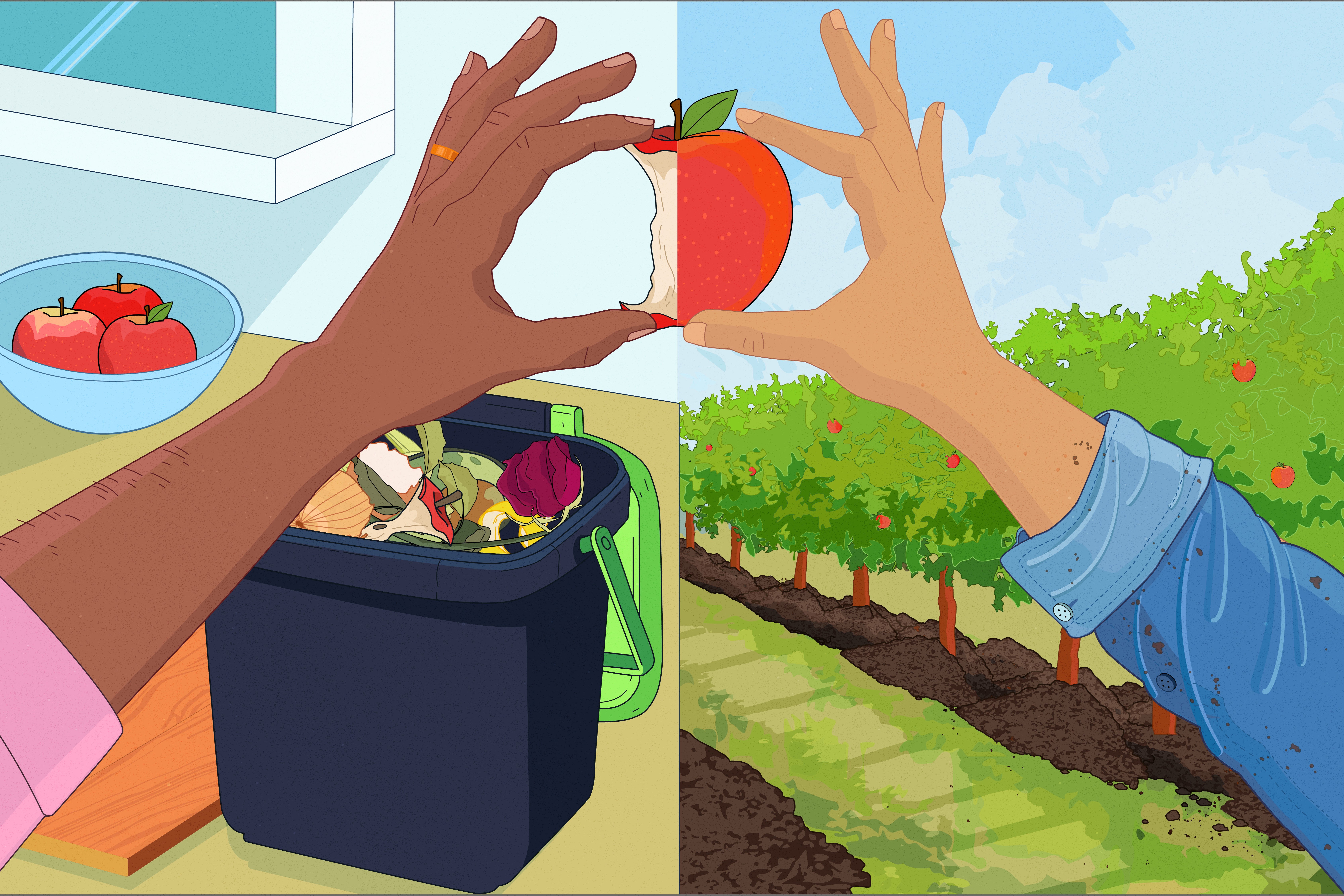
Food and garden organics (FOGO) bins are rolling out across Victoria so we can make the most of every last scrap.
Why we need food and garden organics recycling
When organic materials like food scraps and garden clippings go into the general rubbish bin, they end up in landfill. There, they break down in a way that releases methane, a potent greenhouse gas. But when they are sorted into their own bin, they can be composted instead.
Food and garden organics (FOGO) bins are a convenient and environmentally-friendly way for households to dispose of organic materials.
By separating all your food scraps and garden clippings from rubbish, you help:
- reduce the amount of material going to landfill
- reduce greenhouse gas emissions
- create quality compost for farms, parks and community gardens
- reduce costs – councils (and ratepayers) pay more to send waste to landfill than to a composting facility.
Even items that can’t go in home compost systems (such as bones, citrus and onion peels) are accepted in FOGO bins.
What happens to your food and garden organics
When correctly sorted into your FOGO bin, your food scraps and garden clippings become nutrient-rich compost that helps plants thrive. Farms and community gardens across Victoria use this compost to improve soil quality and grow fresh food.
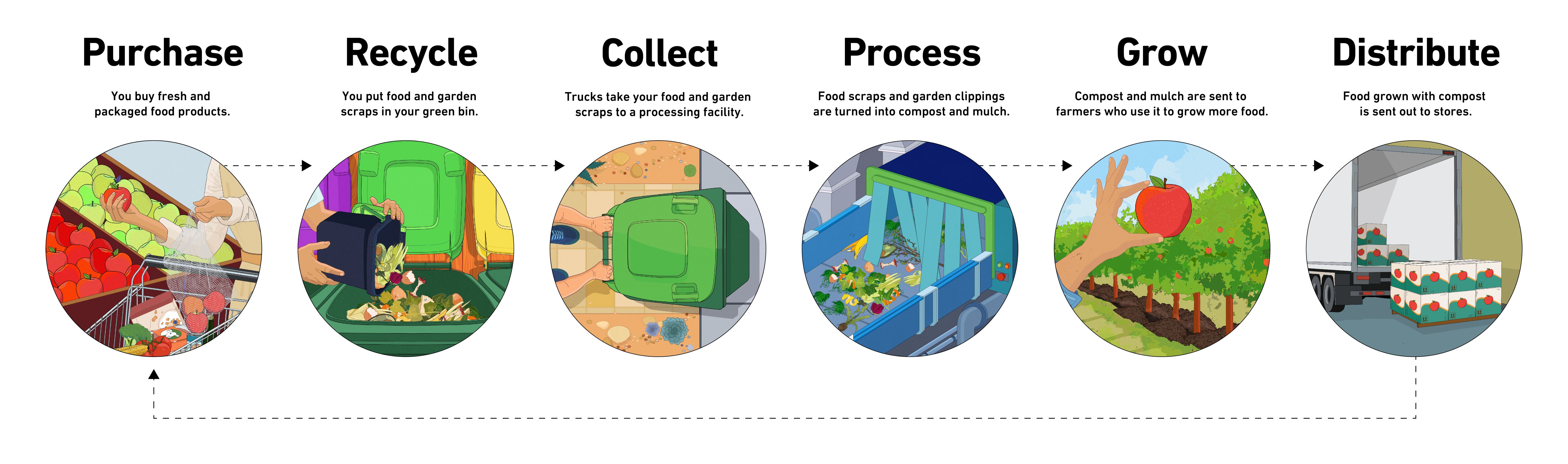
- Purchase: You buy fresh and packaged food products.
- Recycle: You put food and garden scraps in your green bin.
- Collect: Trucks take your food and garden scraps to a processing facility.
- Process: Food scraps and garden clippings are turned into compost and mulch.
- Grow: Compost and mulch are sent to farmers who use it to grow more food.
- Distribute: Food grown with compost is sent out to stores.
Arrows on the image indicate the cycle then returns to the beginning.
The Victorian Government has made large investments into organics processing facilities. These facilities help to recycle more of your food and garden scraps here in Victoria.
New food and garden organics recycling services
Most Victorians already have a FOGO recycling service. By 2030, all Victorians with council recycling and waste services will have their own lime green-lidded FOGO bin or a communal drop-off location. Check with your council for information on when your area will get one, or to find out when your bin is collected and what belongs in it.
Using your food and garden organics bin
A small act, like using your FOGO bin correctly, makes a big impact.
Follow these tips to help keep waste out of landfill and create high-quality compost.
Check what belongs
Visit your council's website to find out what can go into your FOGO bin. Currently, the rules about what can and cannot go in each bin are specific to each local government area.
Collect scraps in a kitchen caddy
- Make it easy to sort and collect your food scraps by setting up a small container in your kitchen.
- Check if your council provides kitchen caddies, or simply reuse something like an ice cream tub.
- Empty the container into the food and garden organics bin when it is full.
- Give it a rinse and then it is ready to collect your veggie and meat scraps again.
Keep rubbish out
If food packaging and other rubbish go into the FOGO bin, the compost becomes contaminated and may go to landfill.
When sorting food scraps, make sure to remove these items:
- fruit stickers
- food packaging like plastic cucumber wrappers, carrot bags, meat trays, etc.
- cling wrap, resealable sandwich bags and containers
- takeaway packaging and utensils, even if they say they're compostable (such as bamboo, sugarcane, cardboard and bioplastic cups, bowls, boxes, straws and cutlery).
Avoid bin smells
Keep your FOGO bin pest-free with these simple tips:
- Store your bin in a shady spot with the lid closed.
- Freeze smelly food scraps and put them in the bin the day before collection.
- Layer garden clippings between food scraps.
Page last updated: 24/09/26