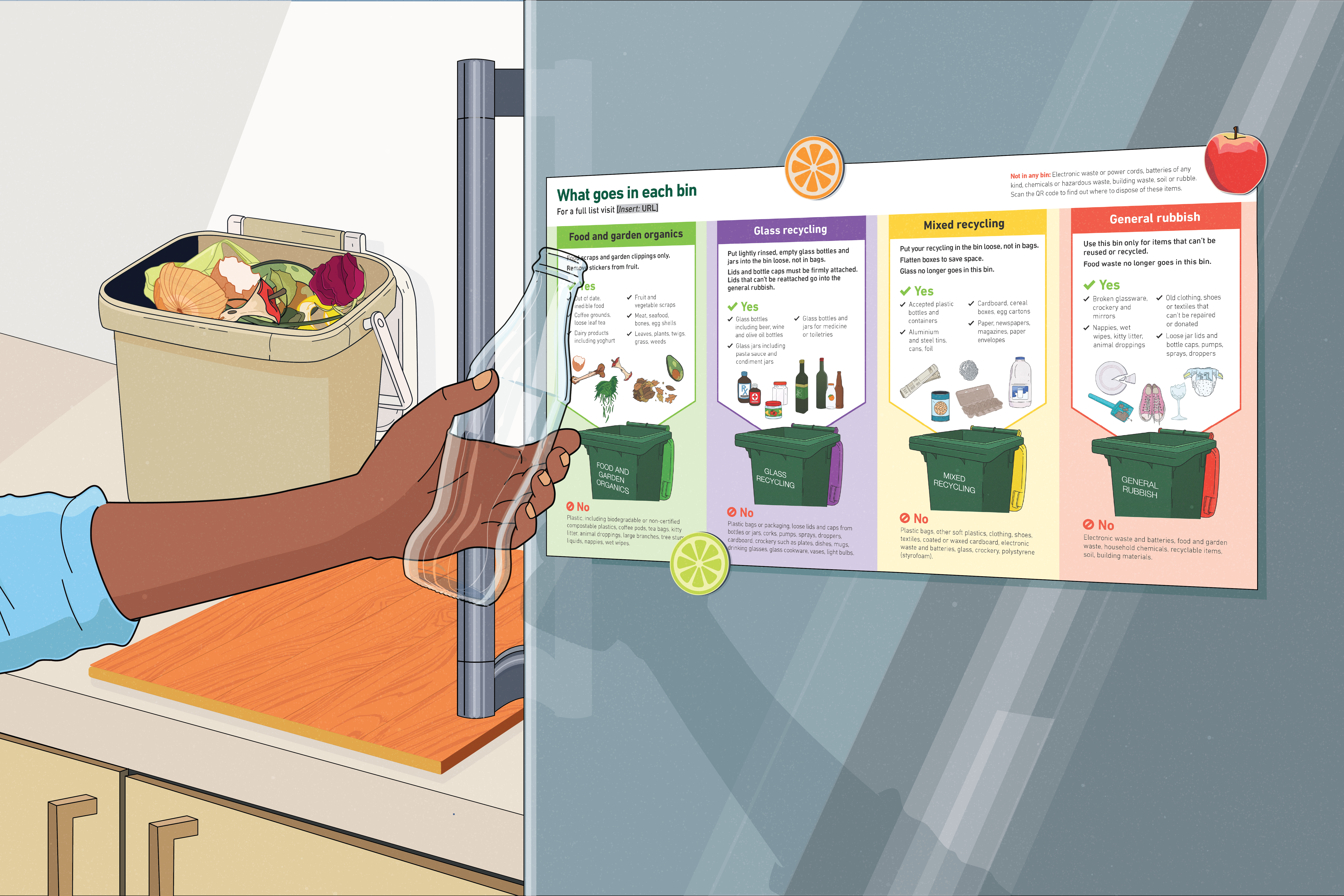
Victoria’s household recycling system is changing for the better. We’re making it easier to know what belongs in each bin, so more can be recycled.
What’s changing
Changes to household recycling are underway across Victoria.
- New bins or drop-off services are rolling out.
- Bin colours are being standardised.
- Items accepted in each bin will be made consistent.
Under the new system, Victoria will have 4 streams for household recycling and waste:
- Food and garden organics (FOGO)
- Mixed recycling (for accepted plastic, metal, and paper/cardboard items)
- Glass-only recycling
- General rubbish
Food scraps and garden clippings often make up about half of the contents of general rubbish bins.
When these organic materials end up in landfill, they produce methane and contribute to climate change. But when they are sorted into food and garden organics (FOGO) bins, they can be turned into compost for farms, parks and gardens instead.
65 of Victoria’s 79 councils have already introduced FOGO services (with lime green-lidded bins).
Find out more about food and garden organics recycling in Victoria.
Broken glass can get caught in other recyclables like cardboard, paper and plastic, making everything harder to recycle. That’s why many countries collect glass for recycling separately. Keeping glass separate helps our recycling facilities process more materials successfully.
Victorian facilities can process all of our glass back into recycled bottles and jars, over and over again.
43 Victorian councils have already introduced separate glass recycling services (kerbside or drop-off), including 27 with kerbside purple-lidded bins.
Find out more about glass recycling in Victoria.
Once separate glass recycling services are available in your area, glass will no longer be accepted in your mixed recycling bin. Separating glass means more paper, cardboard and plastic can be recycled because they are not damaged by broken glass.
All councils will have yellow lids for mixed recycling bins, so they are easy to identify. And a standard list of accepted items will apply, so you know what belongs in the yellow bin no matter where you go in Victoria.
Once food and garden organics services are available in your area, food scraps and garden clippings will no longer be accepted in your general rubbish bin.
This means most households will have less general rubbish, and the bin should smell less (as food scraps will be in the FOGO bin). Councils may change the size of your rubbish bin or how often it is collected, depending on community needs.
Everything in your general rubbish bin goes straight to landfill – it does not get sorted. Councils pay a levy on waste sent to landfill. Keeping food scraps, garden clippings and recyclable materials out of landfill can help reduce these costs, which saves ratepayers money. Recycling or composting as much as we can through other bins also helps the environment.
All councils will also introduce red lids and a standard list of accepted items for general rubbish bins.
Why the system is changing
Victorians are great recyclers. But we can do even better.
The changes to our recycling system will help recover as many materials as possible so less goes to landfill.
Under the new system:
- the same rules for household bins will apply across Victoria, making it easier to sort waste and recycling
- food scraps and garden clippings will be composted instead of sent to landfill, reducing greenhouse gas emissions
- separate glass recycling collections will prevent glass shards getting stuck in other recyclables, allowing more materials to be successfully recycled.
Recycling helps valuable resources be used again and again. This means we need fewer new or raw materials, which protects the environment and supports our transition to a circular economy.
Victoria aims to divert 80% of waste from landfill by 2030. Better recycling services and facilities will help achieve that goal.
The Victorian government has invested more than $538 million to improve recycling. This includes changes to household recycling services and funding for new and upgraded recycling facilities across the state (so more can be recycled locally).
When changes will happen
Many councils have already started making these changes. Others will introduce new bins or change bin colours in the coming years, and the items accepted in each bin may change in your area.
Look out for information from your council about what's happening, and take a minute to refresh your recycling knowledge.
Your small acts, like correctly sorting recycling, make a big impact on Victoria’s sustainable future.
How the changes impact you
Councils have flexibility in how they make the changes to suit their local community.
They will consider aspects like:
- type of housing and how much storage space homes have for bins
- how much organic, recyclable and landfill waste households typically produce
- costs to ratepayers.
Check your council website to find out how and when they will be rolling out the new bins and services.
What about apartments and businesses?
Victoria’s 4-stream bin system will be available to all households that receive council waste services.
Many multi-unit developments such as apartment blocks use private waste services instead. Check with your building manager, owners corporation or waste provider.
Businesses can find more information on waste from their council and the Environment Protection Authority.
Page last updated: 28/09/26