Find local recycling and disposal options
What goes in each bin can vary between councils. Use this search tool to find out where an item belongs.
If an item can't go in a household bin, the tool will show you how and where to recycle or dispose of it safely.
Victoria’s household recycling system
Household waste and recycling services in Victoria are managed by local government. Most households receive kerbside bins and collection services from their councils. Some households (such as those in apartment buildings) may have privately-operated waste services instead.
Most council systems currently include:
- mixed recycling bins for paper, cardboard, plastic and metal, which can be recycled
- food and garden organics (FOGO) bins for food scraps and garden clippings, which can be composted
- general rubbish bins for landfill items that can’t be reused, recycled or composted.
Some councils have introduced separate glass recycling bins or drop-off points as part of changes to Victoria's household waste and recycling system. If your area does not have glass bins yet, glass can go in your mixed recycling bin.
Understanding recycling symbols
Recycling symbols are a common source of confusion. A symbol on a product does not always mean it can go in your recycling bin.
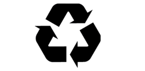
Mobius loop
The ‘Mobius loop’ is a triangle formed from 3 arrows. It can mean an item is recyclable or made from recycled materials. But it doesn’t always mean the item is accepted in household recycling bins. Check your council’s rules or use the search tool above for guidance on specific items.
Plastic codes
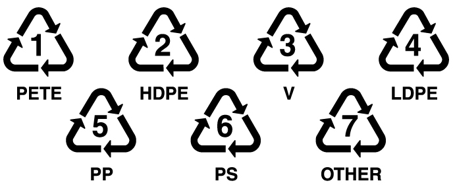
Plastics are typically labelled with a code number from 1 to 7 inside a mobius loop.
These symbols do not guarantee that your council can accept the plastic for recycling.
The code numbers tell you the type of plastic used. For example, PETE/PET (type 1) is used for water and juice bottles, while HDPE (type 2) is used for milk and shampoo bottles.
Each type of plastic is made from different chemicals, which are all recycled separately through different methods. Some are much harder to recycle than others. That’s why only certain types of plastic are accepted in recycling bins.
As a general guide:
- Codes 1 and 2 are commonly accepted in recycling bins.
- Code 5 is accepted by some councils.
- Codes 3, 4, 6 and 7 are less commonly accepted in household recycling bins.
Check your council's rules or use the search tool at the top of this page to find out what is accepted in your area.
Australasian Recycling Label (ARL)
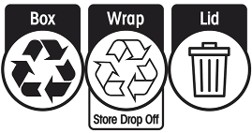
The Australasian Recycling Label can help you sort packaging, especially if the packaging comes in several parts.
- Solid recycling symbol: Put this part in the recycling bin.
- Transparent recycling symbol: This means ‘conditionally recyclable’. To recycle, follow the directions given. In the example below, the wrap must be taken to a store drop-off for recycling, not placed in the recycling bin at home.
- Bin symbol: Put in the general rubbish bin.
Which bin does it go in?
Find general information and advice on sorting common items below.
Most Victorian councils now provide a food and garden organics (FOGO) bin as part of their kerbside recycling services.
If you have a FOGO bin, sort all your food scraps and garden clippings into it so they can be made into compost for use on farms, gardens and parks. Make sure to separate non-compostable materials like food packaging and fruit stickers.
Check local guidelines, as items accepted may differ between councils. Do not include compostable packaging unless it is specifically accepted in your area.
Home and community composting systems are also great ways to process your organic waste. Compost bins, worm farms and bokashi systems convert organic waste into nutrient-rich products that you can use on your garden or share with neighbours.
Food scraps and garden clippings should only go in your general rubbish bin if you do not have access to a FOGO bin or other composting system. That's because everything in the rubbish bin goes straight to landfill, where organic material produces greenhouse gases.
Glass bottles and jars from food, drinks and medicines are widely accepted in council recycling systems in Victoria. They belong in the purple-lidded glass recycling bin if you have one. Otherwise, place them in the mixed recycling bin.
Before recycling:
- empty food and liquid
- rinse if needed
- check whether lids can be attached (this differs between local government areas, so refer to your council website)
- keep items loose (not in bags).
Certain glass beverage bottles can also be returned for a 10c refund via Victoria’s Container Deposit Scheme. Check what’s eligible and find a refund point via CDS Vic.
Other household items made of glass, such as drinking glasses, mirrors, windows, baking dishes, ceramics and perfume bottles, do not belong in recycling bins. These items melt at different temperatures and cannot be recycled with glass bottles and jars. Place them in the general rubbish bin.
These metal packaging items are widely accepted in mixed recycling bins in Victoria:
- Food cans (such as from tinned fruit, vegetables and fish)
- Beverage cans (such as soft drinks and iced coffee)
- Aluminium foil (scrunched into a ball at least the size of a tennis ball) and trays
Before recycling, empty out food and liquid and give items a rinse if needed. Keep items loose (not bagged).
Beverage cans may also be returned for a 10c refund via Victoria’s Container Deposit Scheme, CDS Vic.
Pots, pans, cutlery and other metal household items do not belong in recycling bins. Try donating or giving them away if they are in good condition, or put them in the rubbish bin if they are not usable.
Paper and cardboard items go in mixed recycling bins in Victoria.
Before recycling, remove food, flatten boxes and keep items dry.
Do not put items like paper towels, tissues, serviettes and food-soiled or oily paper/cardboard in the recycling bin. Check your council’s rules for items like shredded paper and wrapping paper.
Many common types of hard (non-scrunchable) plastic packaging are accepted in mixed recycling bins. Examples include:
- milk, juice and water bottles
- yogurt and ice cream tubs
- fruit punnets and biscuit trays
- shampoo and soap bottles.
However, the rules currently vary between councils because different recycling facilities accept different materials. Check your council website or the search tool at the top of this page to see which specific plastic items or codes are accepted in your local area, and whether lids can be attached.
Before recycling, empty food and liquid, rinse if needed, and keep items loose (not in plastic bags).
Certain plastic beverage bottles can also be returned for a 10c refund via Victoria’s Container Deposit Scheme. Check what’s eligible and find a refund point via CDS Vic.
Soft plastics are plastics you can scrunch into a ball. Common examples include:
- plastic bags
- packaging such as chip packets
- the outer wrapper of a biscuit packet (but not the hard plastic tray inside).
These usually belong in the general rubbish bin (not in household recycling bins), unless you have access to a soft plastics collection or drop-off service.
Check locally: some councils are participating in kerbside collection trials or provide drop-off points for soft plastics. An increasing number of supermarkets or other services are offering soft plastics collection again. Learn more at Soft Plastic Stewardship Australia.
Find your nearest soft plastics collection point with the search tool at the top of this page.
Never put batteries or electronics (e-waste) in any household bin. They can start fires in collection trucks and recycling facilities. Take them to a local drop-off point instead.
E-waste includes any item with a plug, cord or battery. If something lights up, moves, or makes a sound, it’s probably e-waste.
Find out how to safely dispose of batteries and electronic waste.
Clothing and textiles do not belong in recycling bins. They can get caught in equipment at recycling facilities and cause big problems.
There are lots of ways to keep clothing and textiles out of landfill:
- Donate, give away or sell items that are in good condition.
- Repair or alter items that have minor damage or no longer fit.
- Repurpose damaged items (e.g. cut them up into cleaning rags or use them to protect surfaces when painting).
- Recycle unwanted clothing and textiles through a collection service or drop-off point.
Never put hazardous chemicals in your household bins or down the drain. They can cause fires or damage the environment.
This includes:
- cleaning products
- pool chemicals
- fertiliser
- paint
- medicines.
Take them to a safe disposal point instead.
Find out more about disposing of hazardous household chemicals.
Page last updated: 24/09/26