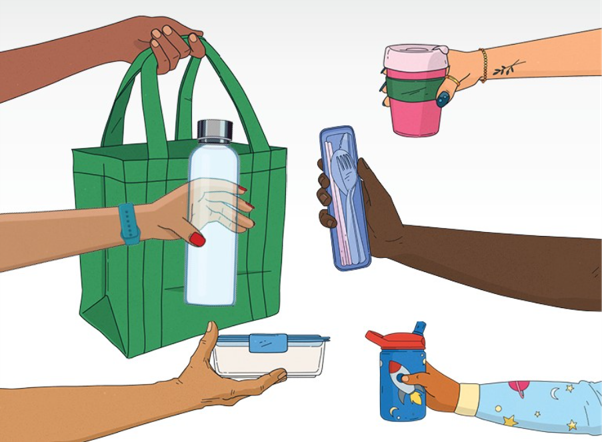
Make simple swaps to cut waste.
Why it matters
Single-use or disposable items are products and packaging that we throw out after only one use. They are often used for only a few minutes, but their impact on our environment can last thousands of years.
Even if items can be recycled or composted, doing so uses up valuable energy and resources.
Choosing items that can be reused over and over helps avoid large amounts of waste from single-use items. Small acts are all it takes to make a big impact.
Try reusable versions of everyday items like:
- coffee cups
- water bottles
- shopping bags
- face masks
- nappies
- menstrual products
- picnicware (cutlery, plates etc.)
- party decorations.
Coffee cups
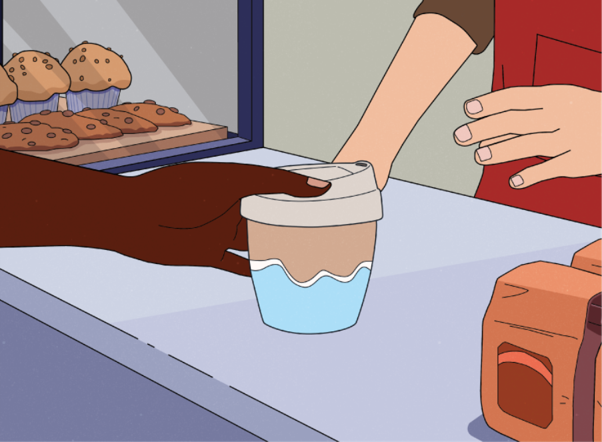
Remember your reusable coffee cup to cut waste and make better use of natural resources.
Why it matters
Victorians use almost 16,000 tonnes of single-use hot beverage cups and lids each year (source: Australian Plastics Flows and Fates Study 2024–25 database).
- Disposable or single-use coffee cups are a major contributor to litter on our streets and in our waterways.
- Single-use coffee cups have a plastic liner, so can't go in any recycling bins (at home or in public).
- Even those labelled 'compostable' cups can't go in food and garden organics bins. Victoria's current composting facilities are unable to process them.
Tips and tricks
- Keep a reusable cup handy. Store one in your office, break room, car, locker, handbag or backpack – wherever you’ll have easy access when you decide to go for a coffee. You can also just take a mug from the kitchen cupboard.
- Choose a responsible cafe and save money. Many cafes offer a discount (sometimes up to 50 cents) if you take your own clean reusable coffee cup. Find a Responsible Cafe near you.
- Forgot your cup? Dine in. If you forget your reusable cup, why not sit down and spend a few minutes savouring your coffee instead?
Coffee cup recycling
Avoiding disposable cups is ideal. But if you get stuck without your reusable cup and don’t have time to sit down for a coffee, it is possible to recycle your disposable coffee cup.
There are hundreds of coffee cup drop-off locations in Victoria where you can recycle your used coffee cups. Find a drop-off location near you with the look-up tool below.
Water bottles
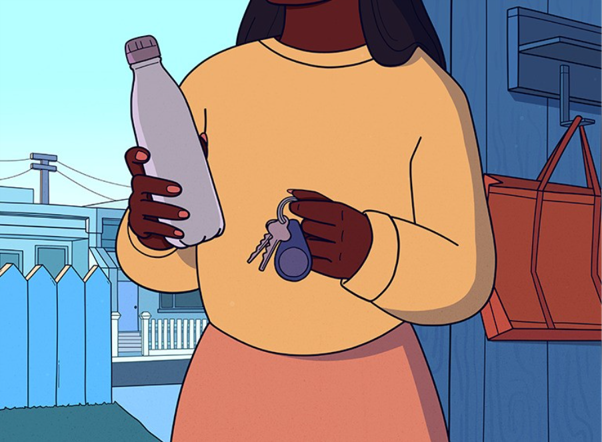
You’ll save money, natural resources and the planet if you remember to take your reusable water bottle when you go out.
Why it matters
Australians buy billions of plastic bottles every year. But this comes at a cost – to the environment, and to your pocket.
- Single-use plastics remain in the environment for hundreds of years, causing considerable damage to wildlife, the environment and our health.
- It takes 3 litres of water and 1 litre of oil to produce just 1 litre of bottled water (source: Clean Up Australia).
- Buying bottled water is on average 2000 times more expensive than the high-quality drinking water we enjoy in Victoria.
Tips and tricks
- Keep your bottle handy. Put your bottle somewhere convenient after you wash it out, like in your bag or next to where you keep your keys.
- Sometimes 2 are better than one. Consider keeping one reusable drink bottle at home and one at work. This way you don’t have to worry about forgetting your bottle.
- Get a free refill on the go. Find your nearest free tap water location on the Choose Tap website to refill when out and about.
Shopping bags
Lightweight plastic shopping bags are banned in Victoria, but you may still be offered other bags at the checkout. Bring reusable bags to reduce waste and avoid buying more. The best bags are the ones you already have and will use many times.
Why it matters
- Plastic items make up over 80% of litter in Australia (source: Clean Up Australia Litter Report FY25).
- Single-use plastics are often used for only a few minutes but remain in the environment for hundreds of years, breaking down into microplastics that harm wildlife, contaminate food and water, and can be harmful to our health.
- They are made from virgin materials such as oil which is a non-renewable natural resource.
Tips and tricks
- Keep your bags handy. Put some by the front door or next to your keys, in the boot of your car or on the passenger seat, or in your handbag or backpack.
- Put them back. After unpacking your shopping, put them back in your usual place so they are ready for next time.
- Keep a variety of bags. Look for ones that are:
- durable (with thick straps and strong stitching, sturdy enough to carry heavier items)
- functional (some bags fold up small enough to easily fit into your carry bag, or can be clipped onto other things)
- sustainable (made from cotton, canvas, calico or recycled plastic)
- appealing to you (if you like the style of something, you are more likely to use it).
- Consider produce bags too. Reusable fruit and vegetable bags (also known as produce bags) are small and lightweight yet strong. Keep some with your reusable shopping bags to avoid using plastic bags when you shop for fruit and vegetables.
Page last updated: 24/09/26