Give household items a longer life by reusing, repairing, sharing or repurposing them instead of throwing them away.
Why it matters
Making new products uses materials, energy and water. Keeping the things we already have in use for longer:
- reduces waste
- saves resources
- can save you money.
Recycling is important, but it still requires products to be collected and processed. Before recycling or disposing of something, consider whether there is another option.
The waste hierarchy
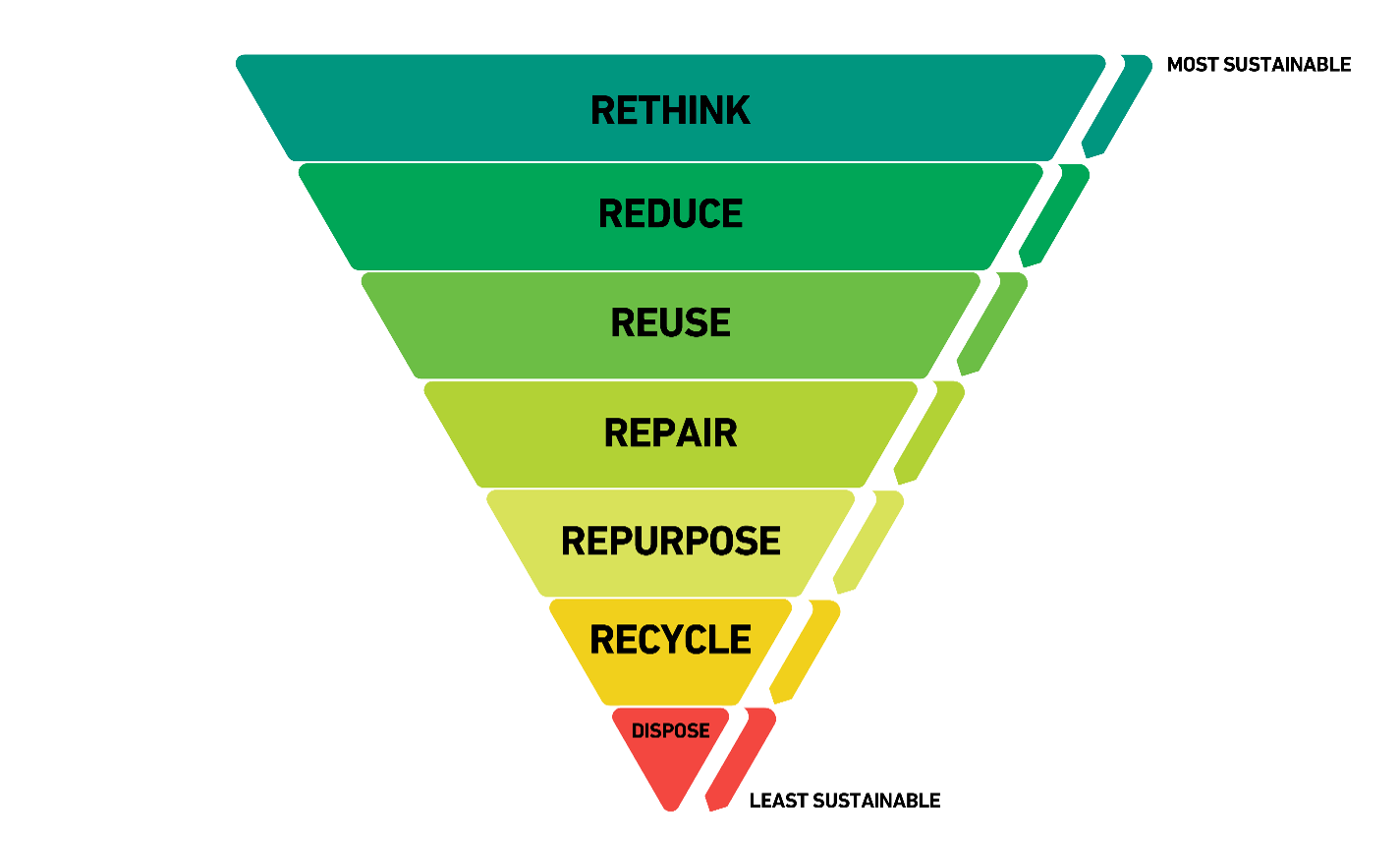
The waste hierarchy (sometimes called the R ladder) shows which actions prevent the most waste. The higher the action is on the hierarchy, the longer products and materials stay in use.
- Rethink what you need.
- Reduce how much you buy.
- Reuse items or pass them on to someone else.
- Repair items to extend their life.
- Repurpose items for a new use.
- Recycle materials that cannot be used again.
- Dispose of items as a last resort.
Tips and tricks
Before buying something new, check whether you already have an item that could do the job. You may be able to clean it, repair it or use it in a different way.
Look after your belongings so they last longer. Follow care instructions, clean items regularly and make small repairs before the damage gets worse.
Check whether a broken item can be repaired before replacing it. You could:
- contact the manufacturer or a local repair business
- look for replacement parts
- use an online repair guide
- ask someone with the right skills for help
- take the item to a repair café.
Repair cafés are community spaces where skilled volunteers help people assess and repair items. Some also share tools and teach repair skills. The items accepted and services available will vary, so check with the repair café before visiting. The Victorian Government has funded many repair cafes through circular economy grants, including the Sunshine Repair Café and the Mernda Repair Café.
Find a repair café near you and check which items are accepted before visiting.
Old or unwanted bicycles may also be suitable for repair and reuse. Brainwave Bikes, supported by through a Victorian Government circular economy grant, accepts donated bikes, refurbishes them and helps find them a new home.
Do not repair electrical products unless you have the right skills. Use a qualified repairer where electrical or other safety risks are involved.
If you will only use something occasionally, you may not need to own it.
Consider borrowing from family, friends or neighbours, or using a local ‘library of things’ or tool library. This can be a great option for items like tools, gardening equipment and recreational gear.
The Wyndham Park Tool Library, supported by a grant from the Victorian Government's circular economy community fund, is one example where members share tools and equipment.
Before buying new, look for a suitable second-hand item through:
- op shops
- second-hand stores
- reuse or tip shops
- online marketplaces
- garage sales
- community selling and swapping groups.
Buying second-hand keeps existing products in use and can cost less than buying new. Resale shops (often located at tips) can recover furniture, toys, bicycles, electrical goods, building materials and garden equipment that might otherwise go to landfill.
Check that second-hand products are safe and suitable before using them, particularly electrical items, children’s products and safety equipment.
When you need to buy something new, look for a product that:
- is well made and suitable for how you will use it
- can be maintained, cleaned and repaired
- has replacement parts available
- comes with clear care and repair information
- is covered by a useful warranty
- will still meet your needs over time.
A cheaper product is not always better value if it needs to be replaced sooner.
Look for another use for items you no longer need. For example, you could:
- turn old clothing or linen into cleaning cloths
- use containers to organise household items
- update furniture with a simple repair or new finish
- use leftover materials for a household or garden project.
Only repurpose items where the new use is safe. Do not reuse packaging or containers in ways they were not designed for if this could create a food, chemical or other safety risk.
If an item is in good condition but you no longer need it, you could:
- sell it through a second-hand marketplace
- swap it with someone else
- offer it through a local community group
- give it to family or friends
- donate it to an organisation that accepts that item.
Check what an organisation accepts before donating. Only donate items that are clean, safe and suitable for someone else to use. Giving an organisation damaged or unusable items can shift the cost and responsibility for disposal to them. Do not leave items outside an op shop, repair café or donation point when it is closed.
If an item cannot be safely reused or repaired, check whether it can be recycled. Some products, including electrical items and batteries, need a specialised recycling or disposal service.
Find out how to sort waste and recycling at home.
Page last updated: 24/09/26